
The AIR group has a unique set of experimental facilities in France :
- A large industrial wind tunnel for the study of flow and atmospheric dispersion on real sites
- An academic wind tunnel for the study of flow and dispersion on idealised academic configurations
- An experimental tunnel for the study of natural convection and tunnel fires
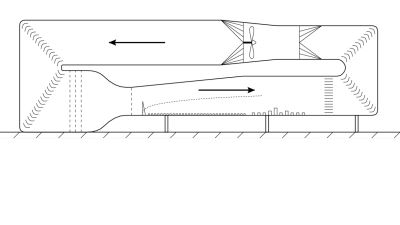
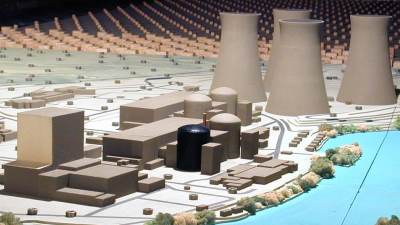

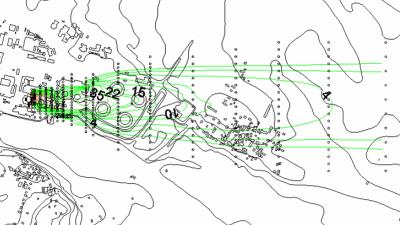
Large industrial wind tunnel
It was constructed in 1977 in collaboration with EDF. This wind tunnel is used to study the dispersion in the atmospheric boundary layer.
Dimensions :
Dimensions :
- Length = 14 m.
- Width = 3,8 m.
- Height = 2 m.
- Flow velocity : [1;10] m/s.
- Stability : neutre.
- Hot Wire Anemometry.
- Laser Doppler Anemometry.
- Particle Image Velocimetry.
- Flame Ionization Detector for concentration.

Academic wind tunnel
This academic wind tunnel has a small width, wich allows 2D analysis.
Dimensions :
- Length = 9 m.
- Width = 0,7 m.
- Height = 1 m.
- Hot Wire Anemometry.
- Laser Doppler Anemometry.
- Particle Image Velocimetry.
- Flame Ionization Detector for concentration.

Experimental tunnel
This experience allows us to study fires in tunnels :
- Smoke stratification.
- Ventilation strategies.
- ...
- Lenght = 1,8 m.
- Width = 0,36 m.
- Height = [0,18;0,36] m.
- Particle Image Velocimetry.
- Laser Doppler Anemometry.
- Laser tomography (visualization)
